

When people think of good extra virgin olive oil, many automatically think of Italy. Tuscany, Umbria, or Puglia immediately conjure images of rolling hills, ancient olive trees, and artisanal producers. However, the reality is more surprising than many people realize.
A significant portion of the olive oil sold worldwide as Italian olive oil is, in fact, entirely or partially sourced from Spain.
This does not mean that Italian olive oil is bad. On the contrary. But it does show how the international olive oil market truly operates.
As the owner of Casa Gomez, I regularly visit producers in Spain. My family comes from the Sierra de Segura in Andalusia, one of the most important olive oil regions in the world. This allows me to see firsthand how Spanish olive oil makes its way to consumers worldwide, even via Italy.
My father also always says that the olive oil from the region used to always be exported to Italy. The Italians are much better at their marketing and you associate olive oil with those beautiful rolling hills in Tuscany.
Spain is by far the largest producer of olive oil
Many people think Italy is the largest producer of olive oil. That's not correct.
Spain annually produces approximately 40 to 60 percent of all olive oil worldwide. In good harvest years, this is even more than half of European production.
Andalusia, in particular, is responsible for a huge portion of this. Provinces such as Jaén, Córdoba, and Granada together form the heart of global olive oil production. The province of Jaén alone often produces more olive oil than all of Italy.
Why does Italy import so much Spanish olive oil?
Italy produces excellent olive oil, but simply not enough to meet global demand. At the same time, Italian brands are extremely popular worldwide.
That is why many Italian bottlers import extra virgin olive oil from Spain. This oil is then:
- blended with Italian olive oil;
- bottled in Italy;
- sold under an Italian brand.
This is completely legal, as long as the origin is correctly stated on the label.
Is that misleading?
Not necessarily. According to European regulations, the bottle must clearly state where the olives come from.
For example, you might encounter texts such as:
- Blend of olive oils originating from the European Union.
- Blend of olive oils originating from Spain, Italy, and Greece.
- Bottled in Italy.
- 100% Italian olive oil.
- DOP/IGP-certified Italian olive oil
The last two points actually mean that all olives come from Italy. "Bottled in Italy," however, only indicates where the oil was filled, not where the olives grew. With a DOP/IGP, you can be sure it comes from a certified region like Tuscany.
Does Spanish olive oil automatically mean lower quality?
Absolutely not. In fact, Spanish producers are now among the most awarded in the world. Annually, they win dozens of international quality awards.
Thanks to modern harvesting techniques, fast processing, and a strong focus on quality, Spain is among the absolute top globally.
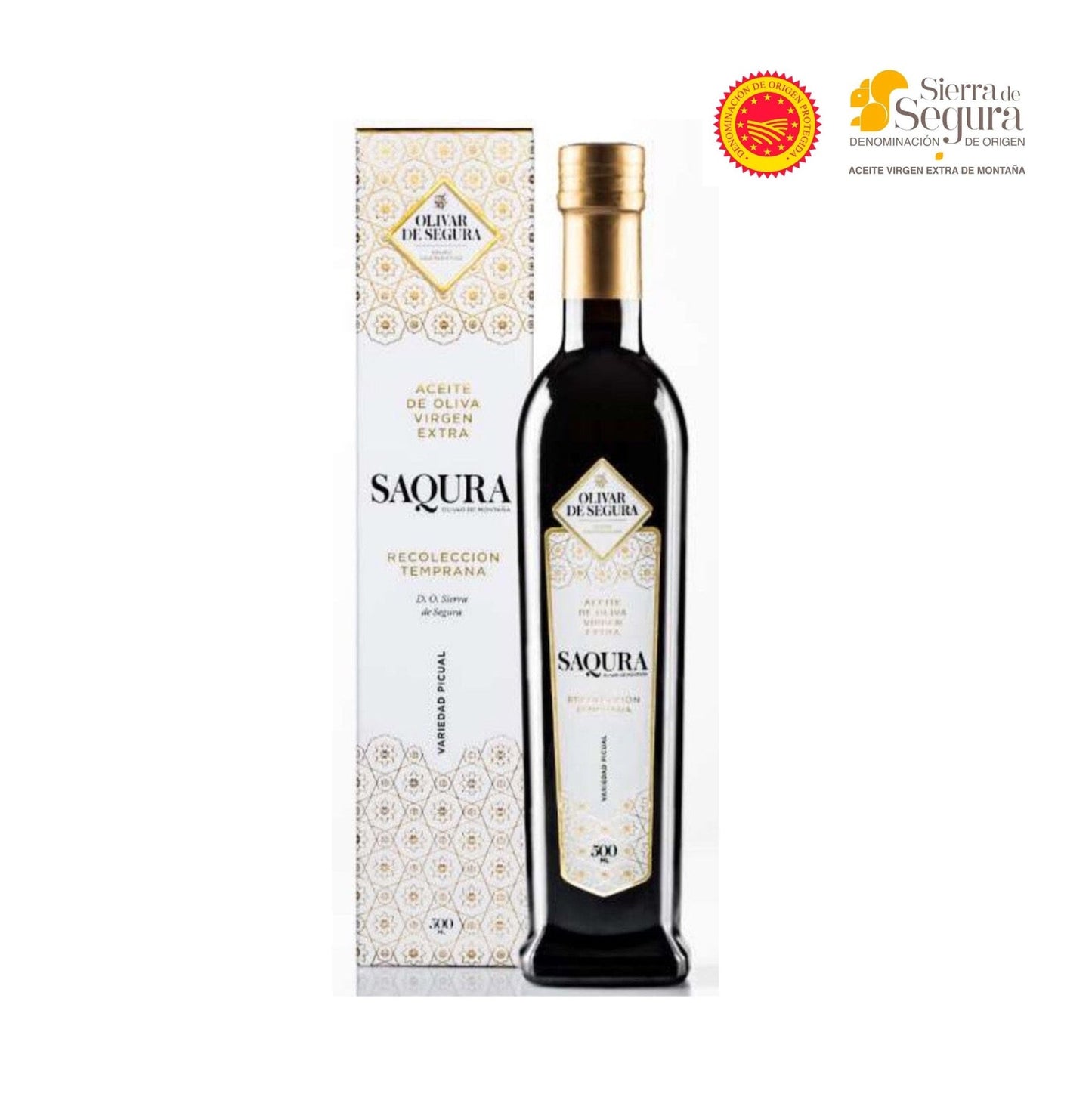
I also see this with the producers I work with. They harvest early, often press the olives within hours, and pay close attention to taste, freshness, and natural antioxidants like polyphenols. Our producers regularly win awards with their extra virgin olive oil, such as the Agatha Ruiz de la Prada and the Saqura.
What should consumers look out for?
When buying a bottle of olive oil, don't just look at the front of the label.
Also check:
- the origin of the olives;
- whether it is extra virgin olive oil;
- the harvest information, if stated;
- whether the producer is transparent about the origin.
A producer who is open about the origin of their olive oil usually also has confidence in their product.
Why do I consciously choose Spanish extra virgin olive oil?
At Casa Gomez, I exclusively sell Spanish extra virgin olive oil. Not because Spanish olive oil is inherently better than Italian. But because I know the producers personally.
My family has its roots in the Sierra de Segura in Andalusia. So, for me, it feels natural to work with producers from the region I've known all my life.
For me, good olive oil is not about the country on the label. It's about the quality of the olives, the speed of processing, craftsmanship, and complete transparency about the origin.
Conclusion
Italian olive oil can be excellent. Spanish olive oil can be excellent too. The most important thing is not which country is on the front of the bottle, but where the olives actually come from and how the oil was produced.
Those who look beyond the label will discover that a large part of the world's top quality comes straight from Spain.
That is something Spanish olive farmers can rightly be proud of, and that's why I sell it in my webshop. Curious? Order a bottle of Spanish olive oil here or organic olive oil here.